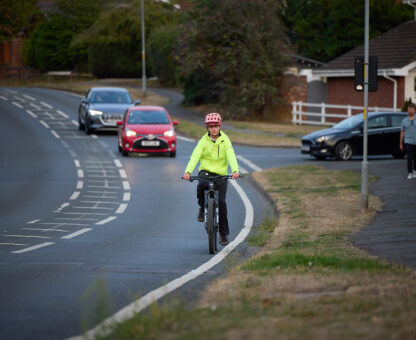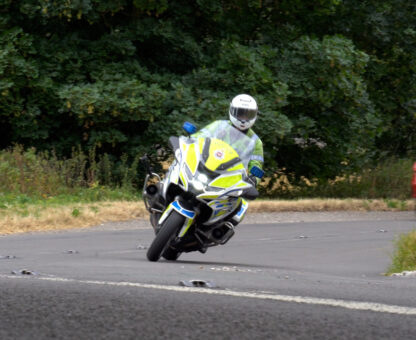

Co-Pilot develops road safety interventions and communication resources for use by road safety practitioners and partner organisations. The aim is not simply to produce engaging campaign materials, but to build interventions that are grounded in evidence, behavioural science and a clear understanding of the problem they are trying to address.
Since 2023, Dr Elizabeth Box has worked with Co-Pilot as its Behavioural Science Consultant, providing ongoing research, behavioural science and evaluation input across the development of Vision Zero Toolbox interventions.
Rather than behavioural science being added at the end, it is embedded throughout the intervention development process. Research helps define the problem and target audience, behavioural theory is used to understand what needs to change, and evaluation is designed around the same objectives established at the outset.
ECMRS provides ongoing behavioural science support across the Co-Pilot intervention development cycle. This includes reviewing existing evidence and data, identifying priority behaviours and audiences, applying behavioural frameworks such as COM-B and the Behaviour Change Wheel, developing intervention plans and logic models, reviewing creative concepts and scripts, advising on measurable outcomes, and designing and conducting evaluations.
The role is deliberately iterative. Behavioural science informs creative development as ideas evolve, while evaluation planning begins early enough for the intended mechanisms and outcomes of an intervention to be tested properly.
For the Highway Code campaign, research identified continuing gaps in understanding of the 2022 Highway Code changes, particularly among experienced drivers. Behavioural science was used to shape an intervention aimed not only at increasing knowledge but also at influencing confidence, motivation and perceived social norms.
The subsequent evaluation used a three-arm pre-post-follow-up experimental design with 254 licensed UK drivers. Participants were randomly assigned to the Co-Pilot intervention or one of two active control films, with 210 completing the four-to-six-week follow-up. This allowed the intervention to be tested against meaningful comparators rather than relying solely on reactions from people who had seen the campaign.
Read the Highway Code evaluation report
For ScootSmarter, behavioural science and research were similarly used to support the development of an intervention addressing confusion around e-scooter law and safer use. The intervention was then evaluated to test whether exposure improved knowledge of key legal requirements and whether those gains were sustained over time.
Read the ScootSmarter evaluation report
Behavioural science and intervention design, research and evaluation
Vision Zero Toolbox & Community / Co-Pilot

2023-Present
Behaviour change, road safety communications, intervention planning, creative development and evaluation
The Highway Code evaluation found that the Co-Pilot film significantly outperformed both comparison films in improving factual knowledge of key overtaking and turning rules. These gains were substantial immediately after viewing and remained evident at the four-to-six-week follow-up.
The film also showed distinctive improvements in behavioural determinants including intentions, perceived behavioural control and subjective norms, and was rated more highly than either control film for usefulness, importance, engagement, personal relevance and likelihood of sharing.
The strength of the intervention design and evaluation received external recognition when the campaign was Highly Commended in the 2025 Prince Michael International Road Safety Awards.
ScootSmarter also demonstrated statistically significant improvements in knowledge of UK e-scooter rules, particularly around where e-scooters can legally be used. Compared with the control group, participants exposed to ScootSmarter showed stronger understanding immediately after viewing, with much of the improvement in rule-based knowledge retained at follow-up. It was also Highly Commended in the CIHT Road Safety Awards in 2025.
This work demonstrates the value of designing research, behavioural science, creative development and evaluation as connected parts of the same process. By defining intended behavioural outcomes at the beginning, making the proposed mechanisms of change explicit and building evaluation into intervention development, Co-Pilot is able to test whether its communications are doing more than attracting attention. The evaluation can examine whether people understood the message, whether relevant behavioural determinants shifted and where an intervention may need to be refined.
The relationship also shows how specialist behavioural science expertise can be embedded within an existing team. ECMRS works alongside creative, communications and road safety practitioners, adding research and evaluation capability to the intervention development process.
For organisations developing communications, education or behaviour-change programmes, this provides a practical model for building behavioural science and evaluation in from the start, rather than using either as a retrospective check once an intervention has already been created.
Projects languages are members of the same family. The languages only differ in their grammar, their pronu nciation and their most common words. sometimes by accident, sometimes on purpose languages are members of the working. 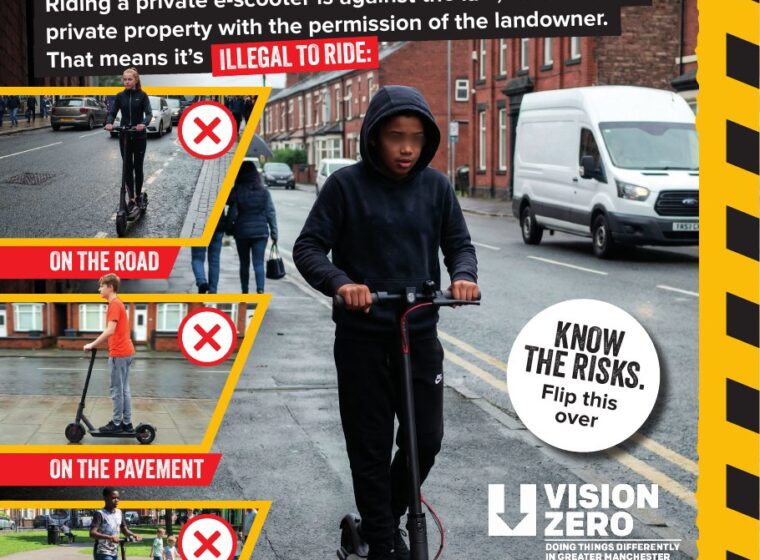 https://www.youtube.com/watch?v=ZXUdbWwaJZkhttps://www.youtube.com/watch?v=jkax4HgIZu0
Box, E. (2025). Highway Code Intervention Evaluation Report. Co-Pilot
Box, E. (2026). ScootSmarter Evaluation Report. Co-Pilot
Transport Scotland’s Building Capacity in the Safe System programme was designed to strengthen understanding and practical implementation of the Safe System approach among road safety practitioners and leaders across Scotland.
The challenge was not simply to increase awareness of Safe System principles, but to support their translation into policy and practice. Transport Scotland wanted to understand how effectively the programme was being delivered, what was working well, where barriers remained, and how the work could be strengthened as it developed. The first phase therefore required an independent assessment of implementation, successes and challenges, while the later phase examined a significantly expanded programme of training and capacity-building activity.
ECMRS provided an independent process evaluation across two phases of the programme.
The first evaluation examined delivery of the initial Building Capacity in the Safe System project, including progress against agreed milestones, the experiences of Transport Scotland and the delivery partner Agilysis, and the key successes, barriers and lessons emerging from implementation. The evaluation drew on project documentation and structured stakeholder interviews, with qualitative data analysed thematically.
Read the Phase 1 evaluation report
ECMRS was subsequently commissioned to evaluate Phase 2, which expanded the capacity-building programme through in-person and online training, stakeholder engagement and the development of a dedicated Safe System Manual. This second evaluation used a mixed-methods design combining stakeholder interviews, participant surveys and document review, allowing the evaluation to consider both programme implementation and participant outcomes.
Read the Phase 2 evaluation report
Independent evaluation
Transport Scotland
2024-2025
Safe System, capacity building, training, road safety policy and practice
The first evaluation found that the programme had met its milestones while adapting flexibly to emerging needs. Strong leadership, communication and coordination supported delivery, while the programme generated high levels of enthusiasm among many practitioners and external experts. It also identified some of the practical challenges involved in building Safe System capability at scale, including stakeholder engagement, time and resource pressures, and the need to continue strengthening understanding of how Safe System principles translate into practice.
Phase 2 showed how the programme had developed further. More than 500 people participated in the training, with demand exceeding expectations. Evaluation findings showed statistically significant improvements in participants’ Safe System knowledge, confidence and perceived relevance to their roles across both in-person and online formats. The two formats offered different strengths. The in-person programme was particularly valued for supporting deeper reflection, collaboration and systems thinking, while the online offer broadened access.
The evaluation also highlighted areas for continued development, including stronger engagement with senior leaders, follow-up support to help translate learning into sustained practice, continued development of the Safe System Manual and opportunities for longer-term evaluation and peer learning.
The two evaluations provided Transport Scotland with independent evidence about both the delivery and emerging impact of its investment in Safe System capacity building.
Rather than simply establishing whether activity had taken place, the work identified where the programme was delivering value, where further development was needed and how future investment could build on the progress already made. The findings also helped distinguish between different forms of capacity building rather than treating training as a single intervention. They provided evidence about the respective value of intensive in-person learning, more scalable online provision, leadership engagement and longer-term support for implementation.
Importantly, the evaluation was undertaken as the programme evolved. This meant the findings could inform development and investment decisions while there was still an opportunity to act on them, rather than evaluation being used only as an end-point assessment.

Box, E. (2024). Safe System Training and Capacity Building. Transport Scotland.
Box, E. (2025). Building Capacity in the Safe System: Phase 2 Independent Process Evaluation Report. Transport Sc
Young novice drivers remain one of the highest-risk groups on UK roads, particularly during the first year after gaining their licence. Parents and carers can play an important role in shaping young driver safety through the supervision they provide, the conversations they have about risk, the boundaries they set and the driving behaviours they model.
Warwickshire Road Safety Partnership developed its From Learner to Licensed parental webinar programme to support parents and carers throughout the learning-to-drive journey. Building on earlier activity, the 2026 programme included a Pre-Driver Webinar for families preparing for or beginning the learning process and a Post-Driver Webinar focused on the transition to independent driving.
Warwickshire County Council commissioned ECM Research Solutions to provide an independent evaluation of the programme, examining not only whether parents found the webinars useful, but whether they influenced the knowledge, attitudes, confidence and behavioural intentions that shape parental involvement in young driver safety.
ECMRS designed a behavioural science-informed evaluation framework covering both stages of the webinar programme. The evaluation was grounded in COM-B and the Theory of Planned Behaviour, allowing measures to focus on behavioural determinants such as knowledge, attitudes, perceived norms, confidence and intentions, as well as the practical behaviours parents were being encouraged to adopt.
The evaluation was designed to capture change at different points in the intervention journey, with baseline measures, immediate post-webinar outcomes and planned follow-up of behavioural practice. This provided a more meaningful test than relying on satisfaction measures alone.
ECMRS developed the evaluation framework and survey instruments, supported data collection, analysed quantitative and qualitative responses and translated the findings into practical recommendations for Warwickshire Road Safety Partnership. Evaluation of the Pre-Driver Webinar, delivered in March 2026, has now been completed. The evaluation used baseline and immediate post-webinar surveys to examine participants’ knowledge, attitudes, confidence, intentions and perceptions of the webinar. A total of 280 parents and carers registered, with 155 baseline responses collected and 27 participants completing the immediate post-webinar survey. The evaluation of the Post-Driver Webinar is continuing, with final reporting due later in 2026.
Independent evaluation
Warwickshire County Council / Warwickshire Road Safety Partnership

2023-Present
Young drivers, parental influence, behavioural science, road safety education and evaluation .
The Pre-Driver Webinar was very positively received by participants. All post-webinar respondents agreed that the webinar was clear and easy to understand, that speakers were credible and knowledgeable, that the advice was practical and relevant, and that they would recommend the webinar to other parents and carers. More importantly, the findings suggested that the webinar was influencing some of the behavioural mechanisms it had been designed to address. Participants showed stronger recognition of the importance of supervised learning, readiness for independent driving, hazard perception development, parental communication and role modelling.
Immediate post-webinar findings were also encouraging in relation to confidence and intended behaviour change. Around 93% of respondents reported increased confidence in supporting private practice, 93% reported greater confidence discussing driving risks, and 93% said they planned to make at least one change in how they supported their young person’s learning to drive. Intended changes included discussing hazards more frequently, providing more structured practice, remaining involved after test pass and reflecting more carefully on parental role modelling. The findings were interpreted cautiously. The immediate post-webinar sample was relatively small, there was substantial attrition between survey stages and individual responses could not be reliably matched across waves. The evaluation also relied largely on self-reported and short-term outcomes. The results therefore provide indicative evidence of acceptability, perceived learning and short-term attitudinal and confidence-related change, rather than causal evidence of effects on behaviour or casualty outcomes.
The evaluation moved beyond the common question of whether participants enjoyed an event. By linking measures to a behavioural theory of change, it examined whether the webinar was influencing the factors that could support greater parental involvement, including confidence, attitudes, communication, supervision and perceived responsibility.
The findings also fed directly into the next stage of delivery. Recommendations from the Pre-Driver evaluation included maintaining a strong focus on parental influence after test pass, providing additional support around higher-risk situations such as passengers, night driving and distraction, strengthening practical resources and helping parents remain involved without increasing conflict. This meant the evaluation was not simply documenting outcomes. It was generating practical learning that could be used to strengthen the next stage of the programme while it was still being developed.
As the programme continues, the evaluation is providing Warwickshire County Council with a stronger evidence base for deciding how parental engagement activity should develop across the learning-to-drive and early independent-driving periods.
Projects languages are members of the same family. The languages only differ in their grammar, their pronu nciation and their most common words. sometimes by accident, sometimes on purpose languages are members of the working. 
Box, E. (2026). From Learner to Licensed Parental Webinar Programme 2026: Final Evaluation Report – Pre-Driver Webinar. Warwickshire County Council.
Box, E. (Forthcoming). From Learner to Licensed Parental Webinar Programme 2026: Post-Driver Webinar Evaluation Report. Warwickshire County Council.
Read more about Warwickshire’s Pre-Driver webinar
Read more about Warwickshire’s Post-Driver webinar
Safe Mobility for All & for Life is an international initiative developed by the FIA in partnership with the United Nations Institute for Training and Research (UNITAR). The programme aims to strengthen road safety capability and support the development of practical projects addressing road traffic deaths and serious injuries.
The Central and Eastern Europe programme combines capacity building with practical project development. Participants from FIA clubs and local government are supported to develop locally relevant road safety pilot projects aligned with national priorities, applying learning from the Safe System approach and other specialist areas of road safety.
A dedicated mentorship programme provides participants with access to experienced road safety professionals who can offer specialist knowledge, strategic advice and constructive challenge as their projects develop. Dr Elizabeth Box was selected to participate as an Expert Mentor, bringing experience in road safety research, behavioural science, intervention development and evaluation to the programme.
Through the mentorship role, Dr Box provides strategic advice and specialist road safety input to support participants as they move from identifying a road safety problem to developing a clear, practical and evidence-informed project proposal.
The role involves regular meetings with mentees throughout the development period, reviewing progress, discussing emerging challenges and providing guidance on the design and development of their projects. Support is tailored to the needs of each project and can include helping participants clarify the problem they are trying to address, consider the available evidence, define appropriate target groups and behaviours, develop realistic objectives and test the logic behind how the proposed intervention is expected to work.
The role is advisory rather than delivery-focused. Participants retain responsibility for developing and implementing their own projects, with mentoring designed to strengthen their thinking, build capability and improve the quality and sustainability of the proposals they develop.
Safe Mobility for All & for Life
FIA / United Nations Institute for Training and Research (UNITAR)
Expert Mentor
2026–2027, ongoing
Road safety, capacity building, strategic advice, project development and international collaboration
The programme is designed to help participants translate road safety knowledge into locally relevant action. Participants undertake capacity-building activity before developing pilot projects that respond to the road safety priorities and operating contexts of their own countries. Projects are intended to be developed in collaboration with relevant national authorities and to connect international road safety principles with practical local implementation.
The mentoring therefore focuses on the quality of the thinking behind the project, not simply the production of a proposal. This includes considering whether the proposed activity addresses a clearly defined problem, whether the intended mechanisms of change are plausible, whether implementation is realistic and how learning from delivery could inform future development. This is particularly important in an international programme, where recognised road safety principles need to be applied in ways that make sense within different policy, institutional and local contexts. As the programme is ongoing, project outcomes and findings are not yet available.
Programme information
The Safe Mobility for All & for Life mentorship programme runs across the project development phase from October 2026 to January 2027. Participating projects are expected to progress to presentation during 2027.
Dr Elizabeth Box participates in the programme in an individual expert capacity. Mentors are not agents, employees or representatives of UNITAR, the United Nations, FIA or the FIA Foundation.
Projects languages are members of the same family. The languages only differ in their grammar, their pronu nciation and their most common words. sometimes by accident, sometimes on purpose languages are members of the working. 
Read more about the Safe Mobility for All & for Life programme
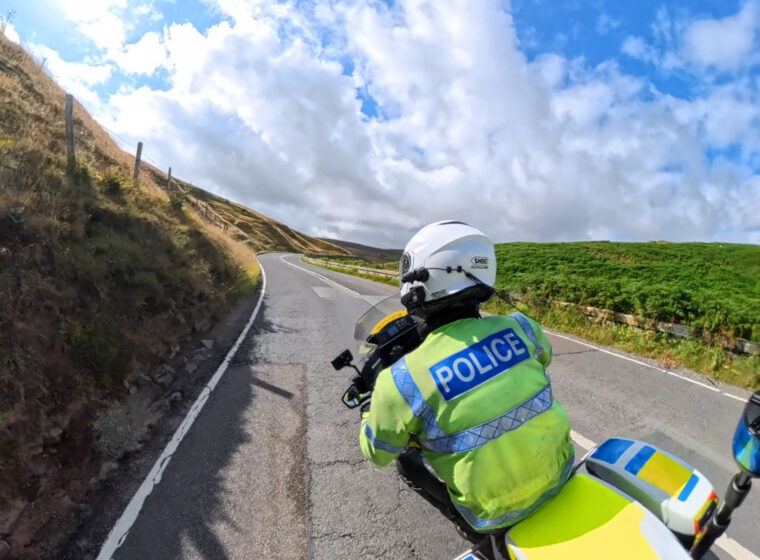
Derbyshire Constabulary is leading a Road Safety Trust-funded project to develop a national communications campaign aimed at improving motorcycle safety. The project builds on pilot research to create a unified, evidence-led behaviour change campaign, co-created with riders and intended for use by police forces nationally through a shared toolkit.
The programme is designed to move beyond one-off communications activity by grounding campaign development in research with motorcyclists and testing messages and creative assets before wider rollout. ECM Research Solutions has been brought in to provide specialist research, behavioural science and evaluation support throughout this process.
ECMRS provides ongoing advisory support to strengthen the quality of the research and evaluation while enabling the project team to lead and deliver the work.
This includes advice and review on research design, support with planning pre- and post-development focus groups, guidance on the collection and analysis of survey data, development of behavioural measures informed by frameworks such as COM-B, and critical review of analysis and reporting.
A key part of the role is supporting the project researcher through the practical decisions involved in designing and delivering the work, combining capacity building with independent methodological challenge and quality assurance.
As the project has developed, ECMRS has also supported the testing of campaign materials. This includes the design of an online experimental study using Prolific, comparing responses to the intervention film with a control condition to assess whether the campaign produces measurable differences in relevant knowledge, attitudes, behavioural determinants and responses to the communications. The intention is not simply to establish whether people like the campaign, but to test whether exposure produces evidence of the changes the intervention is designed to achieve.
Further support will be provided as findings from the pilot phase are translated into revised campaign assets, so that evidence from testing can directly inform creative refinement before national rollout.
Research and evaluation advisory support
Derbyshire Constabulary

2026–2027, ongoing
Motorcycle safety, behavioural science, campaign development, research design and evaluation.
The work is examining both how motorcyclists respond to the campaign and whether exposure produces evidence of the changes the intervention is intended to achieve.
The wider research programme uses qualitative and quantitative approaches to explore rider perspectives, test campaign concepts and understand how different messages are received. The experimental campaign test adds a comparative element by assessing responses against a control condition, rather than relying solely on reactions from people who have seen the intervention.
Because the project is still underway, substantive findings are not yet available for publication. The evidence generated during the pilot and testing stages will be used to inform refinement of the final campaign materials and the wider national communications toolkit.
This project demonstrates how research and evaluation can be built into campaign development rather than added after the creative work has been completed. By combining rider insight, behavioural science and comparative testing, the project creates a clearer line of sight between the road safety problem being addressed, the intended behavioural outcomes, the campaign content and the measures used to judge whether it is working.
ECMRS’s role also demonstrates a flexible model of specialist support. Rather than running the project independently, ECMRS adds research and evaluation expertise where it is most useful, supporting an internal researcher, strengthening methodological rigour and providing independent challenge at key stages of development.
It also means that evaluation findings can influence the intervention while there is still time to change it, strengthening the final campaign before it is made available for wider national use.
The project is ongoing, with final outputs expected following completion of the pilot, campaign development and evaluation phases.
National Highways has a long-term ambition that no one should be harmed while travelling or working on its network. Understanding how best to support road users who face particular risks requires more than identifying where collisions occur. It also means understanding who is involved, why risks arise, what interventions are already available and what the evidence says about their effectiveness.
Across two projects, Dr Elizabeth Box worked as part of multidisciplinary Agilysis teams to develop the evidence base for National Highways in relation to two distinct road-user groups, motorcyclists and older drivers.
The first examined post-licence motorcycle interventions, bringing together evidence about collision patterns, rider groups and the effectiveness of existing approaches. The second focused on older drivers and the challenge of supporting people to remain safely mobile for as long as possible, considering both where risk arises and what forms of intervention can support safety, independence and mobility.
Across both projects, ECMRS contributed specialist expertise in behavioural science, evidence review, intervention development and evaluation within the wider Agilysis project team.
For the motorcycle safety work, the team reviewed post-licence interventions available in Great Britain alongside international evidence on effectiveness, analysed collision data to identify distinct motorcycle crash types and rider groups, worked with National Highways stakeholders, and developed behaviourally informed logic models for priority collision segments. The work also translated the research into practical evaluation guidance, including measures that could be used to assess attitudes, behaviour and commitment to safer riding.
Read the motorcycle safety report
The older driver project used a similarly integrated approach. A review of international evidence was combined with a review of existing interventions in Great Britain, analysis of STATS19 collision data across National Highways’ six regions and structured stakeholder engagement. The COM-B framework was used to examine how interventions addressed capability, opportunity and motivation, and the work developed practical recommendations for intervention design and evaluation.
Research and evidence, behavioural science and intervention design
National Highways

As part of the Agilysis project team
2024-2025
Motorcycle safety, older drivers, collision analysis, evidence review, behavioural science, intervention development and evaluation
The motorcycle research highlighted the diversity of both motorcycle collisions and the people involved in them. Seven collision segments were identified, shaped by factors including motorcycle size, urban or rural setting and junction involvement. This challenged the idea of treating motorcyclists as a single audience. The findings provided a stronger basis for targeting interventions around identifiable collision circumstances and rider groups rather than relying on broad, one-size-fits-all approaches.
The review also found a significant weakness in the existing evidence base. Although many post-licence motorcycle interventions are available, relatively few had been robustly evaluated, making it difficult to determine what works and for whom. The work therefore highlighted the need for stronger links between identified risks, intervention design and evaluation.


For older drivers, the evidence identified four broad approaches to intervention, including education, technology-assisted interventions, on-road training and system-level initiatives. Education could improve awareness and knowledge but was less likely to produce sustained change without practical reinforcement, while personalised on-road training showed stronger evidence of improving driving performance.
The collision analysis also showed that risk changes with age. Although older drivers are involved in fewer collisions overall than younger age groups, collisions tend to become more severe with age, with particular issues around junctions and rural roads. As with the motorcycle work, the findings reinforced the importance of moving beyond broad road-user categories and designing responses around the circumstances in which risk occurs.
Both projects moved from a broad road safety priority towards a more targeted basis for action. By combining collision analysis with evidence about existing interventions and behavioural science, the work connected who is at risk and where with what might realistically be done in response.
For motorcycle safety, this provided a framework for developing interventions around identifiable collision types and rider groups, supported by behavioural theory and practical evaluation guidance.
For older drivers, the work identified opportunities to strengthen practical training, make better use of technology, improve support around mobility and driving cessation, and develop more consistent approaches to evaluation.
Together, the projects demonstrate how evidence review, collision analysis and behavioural science can be combined to support more focused decisions about intervention development, evaluation and future investment.
Box, E., Kinnear, N., Fosdick, T. (2024). Improving motorcycle safety: A review of interventions and guidance for development and evaluation. National Highways.
Box, E., Fosdick, T., Özkan, Ö., Khatri, D. (2025). Older Driver Collision Analysis and Evaluation of Interventions. National Highways.